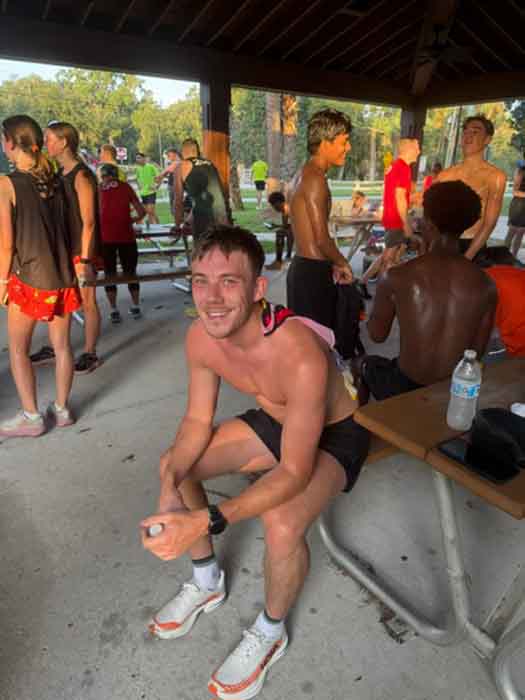
The temperatures may finally be cooling down in Clermont, but the Florida humidity clearly hasn’t received the message. Saturday morning brought another warm, sticky start to Clermont Waterfront parkrun, where runners and walkers gathered for their weekly 5K along Lake Minneola.
There are two moments in every parkrun that can test you in completely different ways. The first comes before you’ve taken a single step: getting yourself to the starting line. The second comes much later, when you crest that final bridge and see the finish line stretching out in the distance.

One requires the motivation to begin. The other demands the determination to finish.
This week, we asked participants a simple question: “What brought you to the start line today, and how did you feel when you crossed the finish?”
Their answers revealed that everyone has a reason to start and a story when they finish.
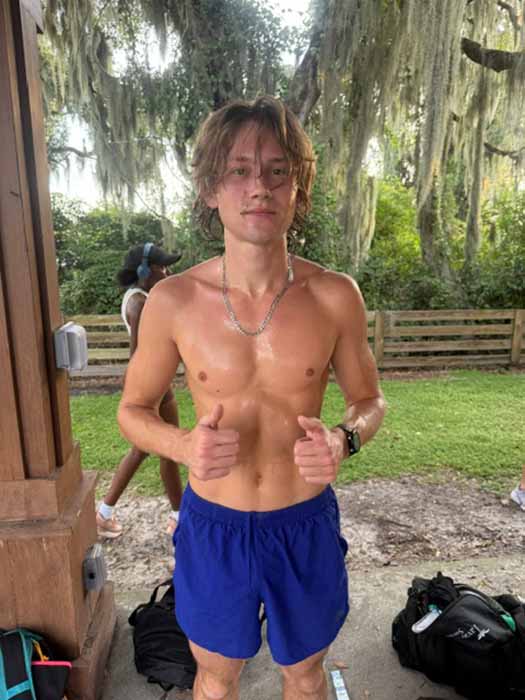
For Saturday’s overall winner, Noah Kaegi, simply showing up was perhaps his biggest victory of the morning. The talented Lake-Sumter runner crossed the finish line in an impressive 16:36, but his morning was anything but promising.
“I probably had four hours of sleep. I really didn’t want to come,” Noah admitted. “I thought about texting my coach that I wasn’t feeling good.”
Things didn’t improve during his warmup. His calf was hurting, he felt dehydrated, and cramping only added to his doubts.
“I just didn’t want to do it today. But I got on the line and got it done.” And did he ever.
When Noah reached the final 200 meters, his focus shifted entirely to the finish. “I got my chest up, tightened my core, and focused on that finish line.” Sometimes the hardest part of winning a race is deciding to show up for it.
Declan Baxter, who finished in a strong 19:24, knows a thing or two about what parkrun can become once you make it part of your routine.
A few years ago, Declan joined a running club primarily for the social experience. Somewhere along the way, the fitness side took hold. His parkrun times dropped from 28 minutes to a personal best in the 17-minute range.
When he reaches the final bridge, Declan breaks the challenge into smaller pieces.
“I take it a hundred meters at a time. Knock out a hundred meters, and then do it again. I’m chasing time at that point.”
For others, the motivation isn’t necessarily a personal best. Sometimes it’s simply having someone beside you—or someone you desperately want to beat.
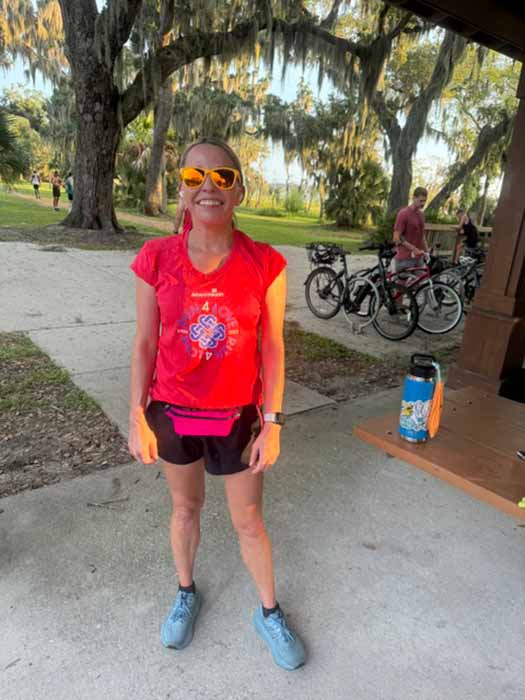
Catie Devoe, making her 93rd parkrun appearance, has developed a strategy that begins with patience.
“I try to take the first mile slow. After I get up that hill between a mile and a half and mile two, I just keep going. That’s the toughest section for me. I know I have to keep going, even when I want to stop.”
But Catie has another source of motivation.
“I run with my husband, so my strategy is just to beat him.”
Nothing like a little friendly household competition to get you across the finish line.
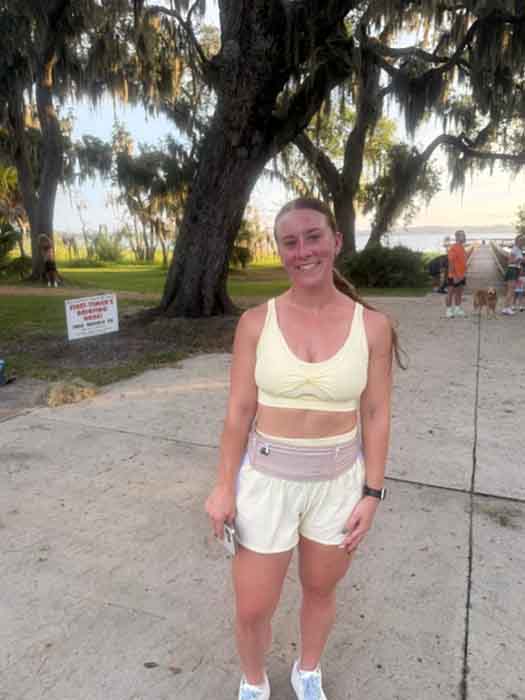
Amber Keiper believes the mental challenge begins long before the first hill.
“It really takes motivation to get up in the morning and go. Knowing when I get up that I’m going to do parkrun—that’s the mentality I have to have with all my fitness goals.”
Once Amber reaches the final bridge, she finds a new target.
“I chase the person in front of me. I keep saying in my mind, ‘I’m almost there. I’m almost done.'”
It’s a familiar conversation many of us have with ourselves during those final few hundred meters.
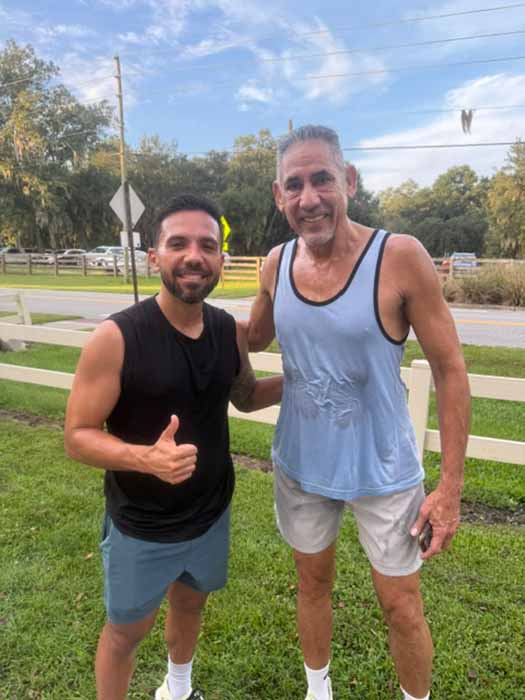
Jose Calcano takes a more calculated approach. His race strategy was already taking shape days before Saturday morning.
“I started thinking about it throughout the week, what type of pacing I was going to use.”
His plan was simple: start fast, settle into a comfortable rhythm through the middle, and find another gear toward the finish.
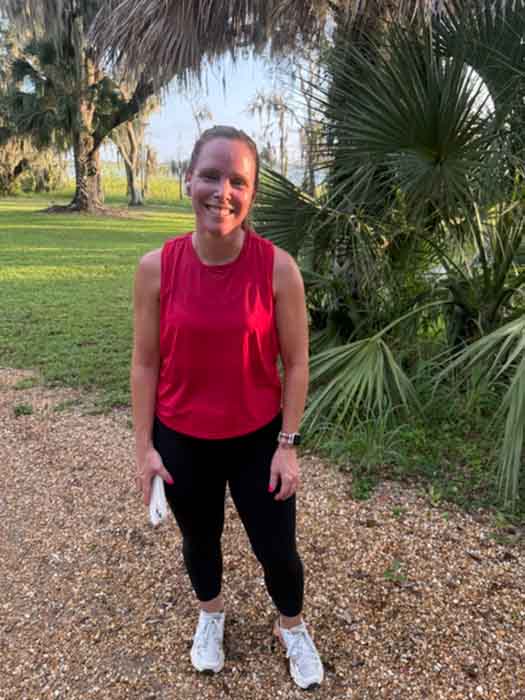
While experienced parkrunners often arrive with a strategy, Emma Lobo arrived with something entirely different: first-time nerves.
“Today was my first parkrun, so I was a bit nervous,” Emma explained. “I was getting ready and making sure I didn’t forget anything. I ended up rushing to get here, so I didn’t have time to stretch.”
But once she started running, those nerves gave way to something much more enjoyable.
“The running was really fun. It was really nice having this community to run with.”
As she approached the finish, Emma found another runner to pace alongside, using that shared effort to carry her through the final stretch.
That’s one of the special things about parkrun. You can arrive not knowing anyone and finish feeling like you’re part of something.
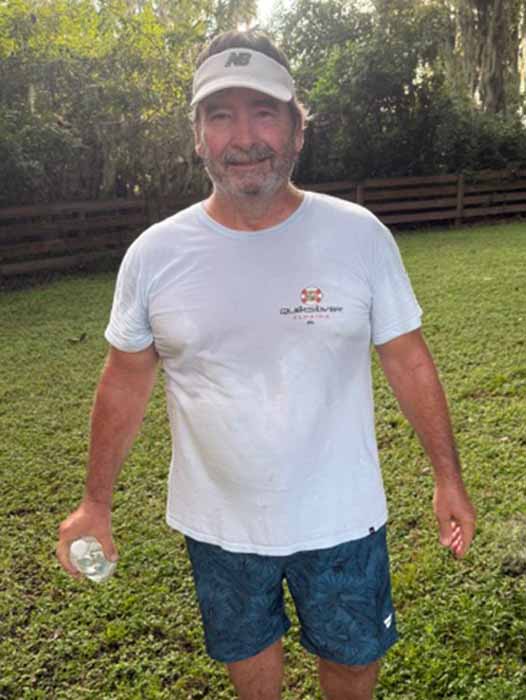
Gerry Wilson offered perhaps the most optimistic description of the final bridge.
“You can see that finish line from a long way away. It’s a nice straightaway. When you crest the bridge, you feel like the rest of the way is downhill!”
And after battling the earlier hills, the humidity, and whatever doubts may have crept into your head, that’s a pretty welcome feeling.
But Gerry’s connection to parkrun goes far beyond the view from the bridge.
“parkrun has saved me,” he shared.
While preparing for a transplant, a friend had told Gerry about parkrun. He kept the idea in the back of his mind throughout that difficult period.
“After the transplant, the first thing I did was come out to parkrun. Every week I would try to get a bit quicker. It has certainly saved me.”
It’s difficult to imagine a more powerful reminder of why this free, weekly community event matters.
For some, the starting line represents a chance to run a personal best. For others, it’s a commitment to fitness, an opportunity to spend time with family, or a chance to meet new friends. And sometimes, as Gerry reminds us, simply being able to stand on that starting line means more than any finishing time ever could.
The view from the finish is different for everyone.
Noah sees the reward for pushing through a morning when he nearly stayed home. Declan sees another opportunity to chase the clock. Catie sees a chance to outrun her husband. Emma sees a welcoming community she has just discovered. And Gerry sees something much bigger than five kilometers.
Every Saturday, that final bridge offers the same view of the finish line. But what it represents changes with every person who crosses it.
And perhaps that’s the real beauty of parkrun.
Getting to the start line is a decision. Getting to the finish line is an accomplishment. What happens between the two is your story.
We’ll see you next Saturday at Clermont Waterfront parkrun. Your story is waiting at the starting line.