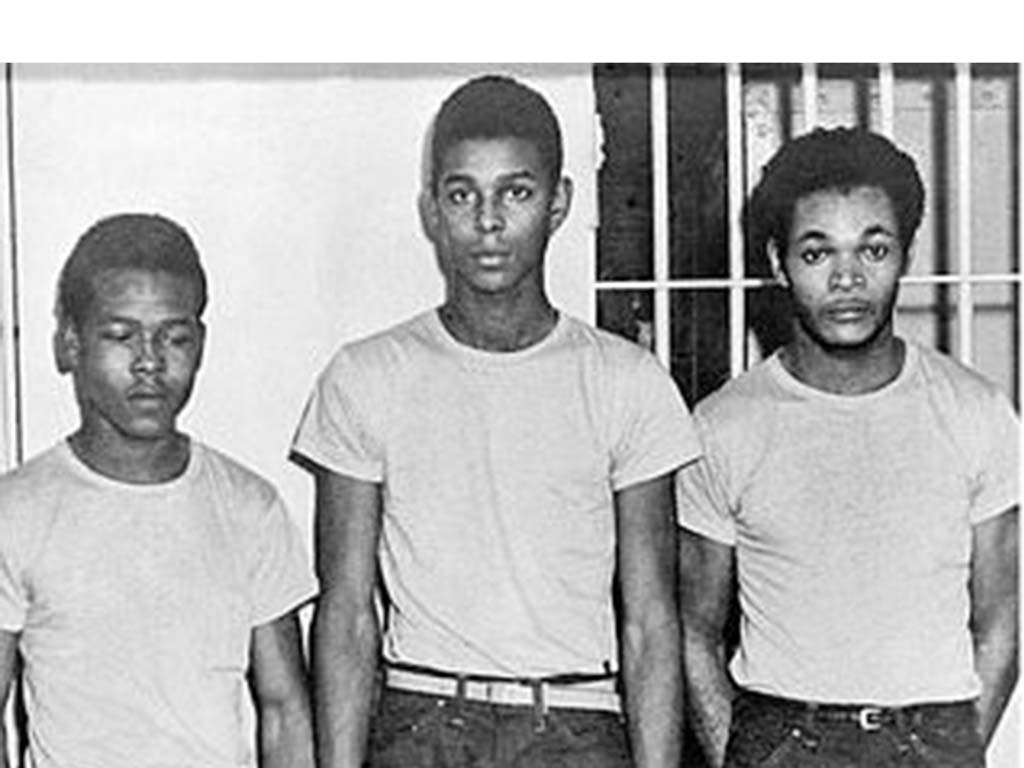
More than 75 years after four young Black men were accused of a crime that would forever alter their lives and stain Florida’s justice system, the descendants of the Groveland Four have received another measure of long-awaited justice.
This year, the Florida Legislature awarded $4 million to the families of Ernest Thomas, Charles Greenlee, Samuel Shepherd, and Walter Irvin—four men whose names became synonymous with one of the most notorious civil rights cases in American history.

The compensation follows a series of historic actions taken by the state over the past decade, including a formal apology in 2017, posthumous pardons in 2019, and exoneration in 2021, when Florida officially recognized that the men should never have been convicted.
For generations, the Groveland Four case has stood as a stark reminder of how racism, fear, and injustice operated in the Jim Crow South. Today, it serves as both a cautionary tale and a testament to the persistence of families who refused to let the truth be buried.
A Summer Night That Changed Everything – The story began in July 1949 on a rural road in Lake County. Seventeen-year-old Norma Padgett and her estranged husband, Willie Padgett, reported that their car had broken down near Groveland. They told authorities that four Black men had abducted and raped Norma.
Within hours, the accusation ignited racial tensions throughout Central Florida.
The accused men were Ernest Thomas, 26; Charles Greenlee, 16; and World War II veterans Samuel Shepherd and Walter Irvin. In the racially segregated South of the late 1940s, an allegation involving a white woman and Black suspects often led to swift judgment long before any evidence could be examined. For the Groveland Four, the presumption of innocence never existed.
Mob Violence and Coerced Confessions – As news of the accusation spread, violence quickly followed. Thomas fled after learning of the charges against him. A massive armed posse, reportedly numbering nearly 1,000 men and aided by bloodhounds, searched for him across Lake County. Several days later, Thomas was found sleeping beneath a tree and was shot to death.
Meanwhile, Greenlee, Shepherd, and Irvin were arrested and taken to the Lake County jail in Tavares.
According to historical accounts, the men were severely beaten while in custody. Authorities sought confessions through intimidation and violence. Irvin refused to confess despite the abuse.
Outside the jail, racial tensions escalated. An angry mob burned Samuel Shepherd’s family home to the ground. The atmosphere surrounding the case made a fair trial virtually impossible.
Convictions Amid a Climate of Fear – The three surviving defendants were tried before an all-white jury. Despite serious questions about the evidence and allegations of misconduct by law enforcement, all three men were convicted.
Because he was only 16 years old, Charles Greenlee received a life sentence. Samuel Shepherd and Walter Irvin were sentenced to death.
The convictions drew national attention and became a rallying point for civil rights advocates, particularly the NAACP Legal Defense Fund. Leading the legal challenge was a young attorney named Thurgood Marshall, who would later become the first Black justice on the United States Supreme Court. Marshall argued that the defendants had been denied their constitutional rights. He pointed to the inflammatory publicity surrounding the case and the exclusion of Black citizens from jury service.
In 1951, the United States Supreme Court agreed, overturning the convictions of Shepherd and Irvin and ordering a new trial. For many, it appeared justice might finally prevail. Instead, the case took an even darker turn.
The Shooting on a Lake County Road – On November 6, 1951, Sheriff Willis McCall was transporting Shepherd and Irvin from Raiford State Prison back to Lake County for the retrial.
According to McCall, the two men attempted to escape while handcuffed. He responded by opening fire. Samuel Shepherd was killed instantly.
Walter Irvin survived despite suffering serious wounds. From his hospital bed, Irvin told investigators that there had been no escape attempt and that the shooting was a deliberate act.
The incident drew national scrutiny and intensified concerns about racial injustice in Florida. Yet even after surviving the shooting, Irvin’s legal ordeal was not over.
At his second trial, he again faced an all-white jury. Once more, he was convicted and sentenced to death. The sentence was later commuted to life imprisonment. Irvin was eventually paroled in 1968 but died the following year. Greenlee was released in 1962 after serving more than a decade behind bars and lived until 2012.
By then, all four men were gone.
Families Keep the Story Alive – Although the legal proceedings ended decades ago, the families of the Groveland Four never stopped fighting to clear their loved ones’ names.
Children and grandchildren carried the story forward, speaking publicly about the injustice and urging government officials to revisit the case.
Their efforts gained traction as historians, journalists, legal scholars, and civil rights advocates reexamined the evidence and documented the racial climate that shaped the prosecutions.
The publication of the Pulitzer Prize-winning book Devil in the Grove introduced the case to a new generation, chronicling both the ordeal of the Groveland Four and Thurgood Marshall’s determination to challenge racial injustice in the courts.
As public awareness grew, so did calls for official action.
Florida Confronts Its Past – In 2017, the Florida Legislature formally apologized for the injustice suffered by the Groveland Four. Two years later, Governor Ron DeSantis and the Florida Executive Clemency Board unanimously approved posthumous pardons for all four men.
The decision was widely viewed as an important acknowledgment that the state’s justice system had failed them. But many family members and supporters argued that a pardon alone was not enough. A pardon implies forgiveness. The families wanted recognition that the men were innocent.
That recognition came in November 2021.
A Florida judge formally exonerated the Groveland Four, vacating the convictions and affirming that the prosecutions had been fundamentally unjust.
For descendants who had spent decades seeking justice, the ruling represented a turning point. The state had finally moved beyond forgiveness and acknowledged innocence.
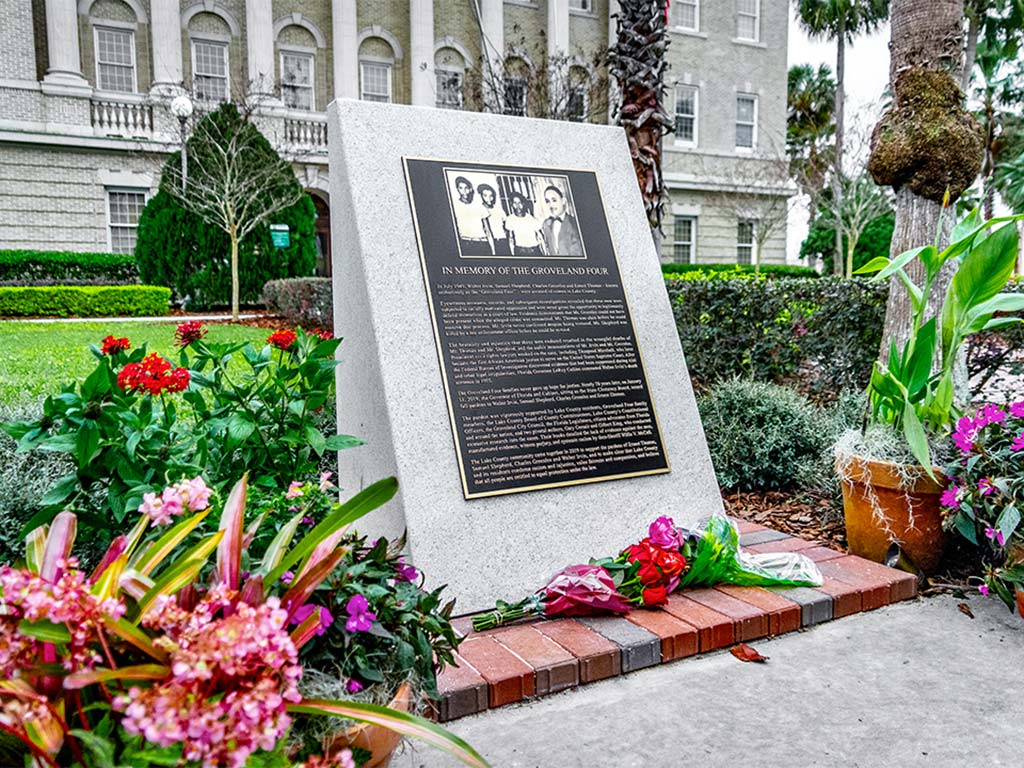 A Monument to Memory – Today, visitors to the Lake County Historic Courthouse can see the Groveland Four Monument, dedicated in 2019.
The memorial honors Ernest Thomas, Charles Greenlee, Samuel Shepherd, and Walter Irvin while reminding future generations of the consequences of prejudice and the importance of equal justice under the law.
What was once a story known primarily to civil rights historians has become part of Florida’s public memory.
The Meaning of Justice – Norma Padgett never recanted her allegation. She died in 2024 at the age of 92. Yet decades of historical review, legal analysis, and government action led state leaders to conclude that the Groveland Four were denied the fundamental protections promised by the American justice system.
No amount of compensation can restore the lives lost, the years spent in prison, or the suffering endured by generations of family members.
Still, the recent $4 million award to the descendants carries symbolic weight. Combined with the state’s apology, pardons, exoneration, and public memorial, it represents Florida’s acknowledgment of one of its most painful chapters.
The story of the Groveland Four is no longer simply a tale of injustice. It is also a story of perseverance—a reminder that while justice delayed can never fully heal old wounds, the pursuit of truth can endure across generations.
More than seven decades after that summer night in 1949, the names Ernest Thomas, Charles Greenlee, Samuel Shepherd, and Walter Irvin have finally been restored to the historical record—not as criminals, but as victims of a profound miscarriage of justice.