Much of the downtown and surrounding history still exists in its own current-day way. For example, the Roe Building, located at 798 W. Montrose Street, was built in 1912 by Charles O. Roe for the purpose of a bank. The building continues to stand proud, and with the help of some updating and reinforcement, is now the home to several businesses and apartments, including the Cosa Nostra Italian Deli.
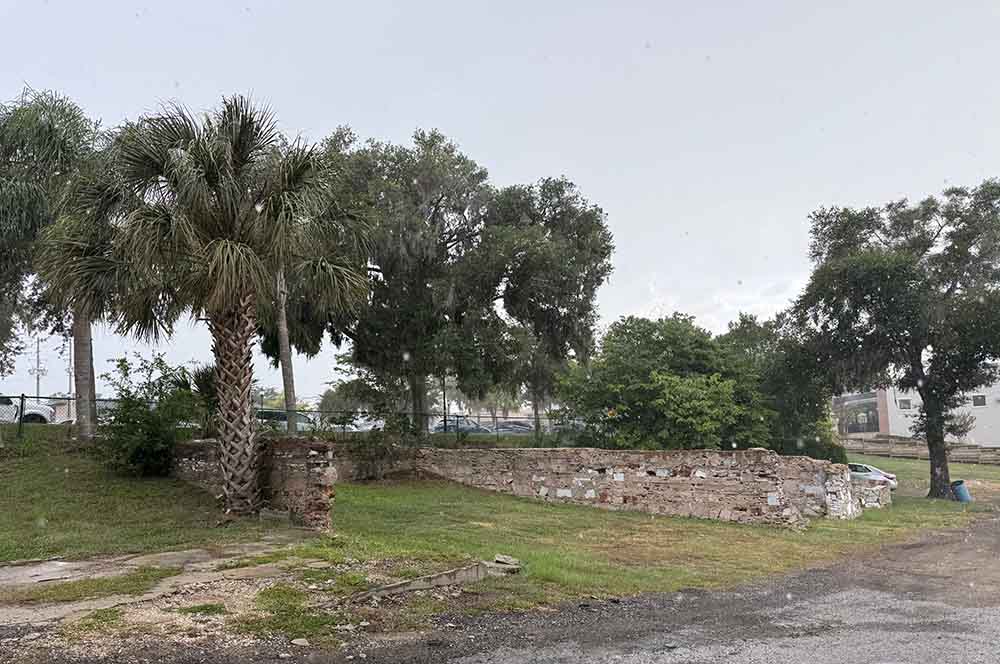
But historic downtown Clermont is not without a few secrets that remain visible to the casual passerby. One such mystery is hidden in plain view on Minneola Avenue, between 7th Street and 8th Street, on the north side of the road. The area is currently vacant of structures and used as an unpaved public parking lot for downtown shoppers and eatery customers.

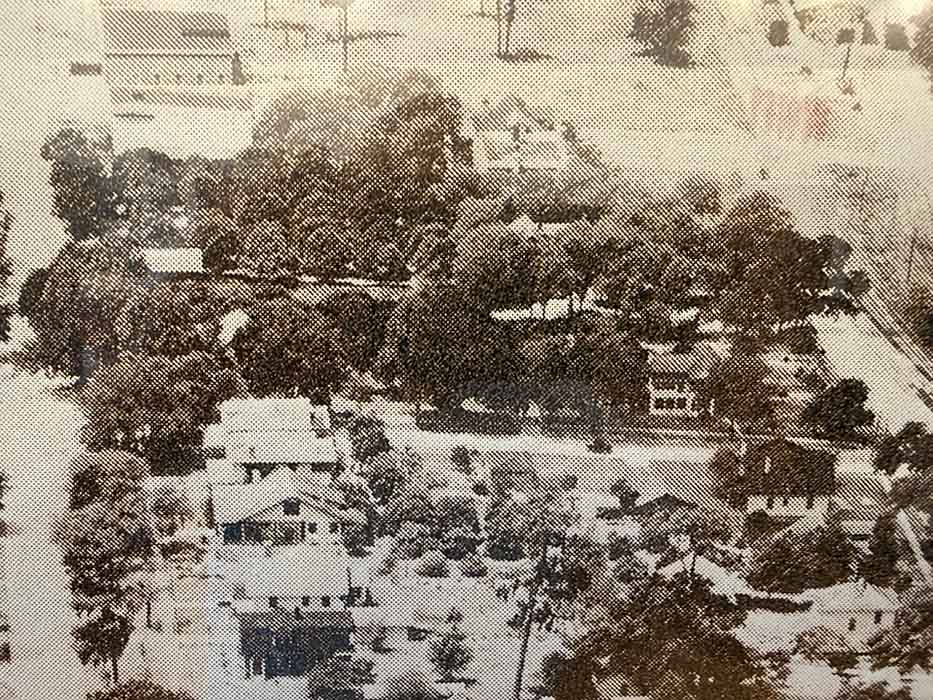
Utilized as a parking overflow lot, the tree-adorned piece of property once housed two 2-story, wood-frame homes on each corner of 7th Street at Osceola Street and 7th Street at Minneola Avenue. Both of those structures, built in the early 1900s, were removed in the late 1960s, one by demolition and one by fire.
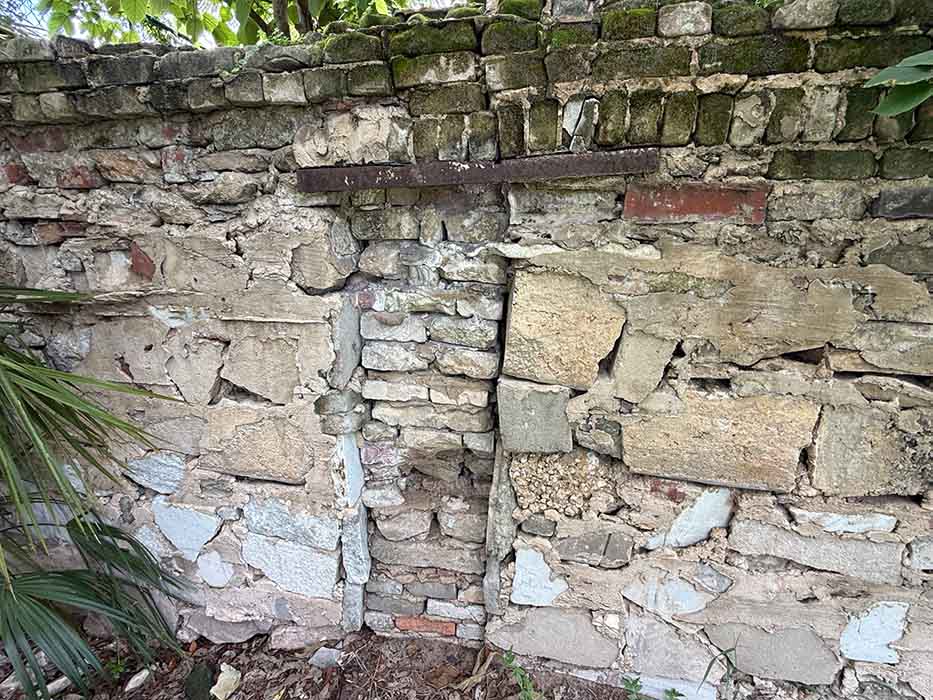
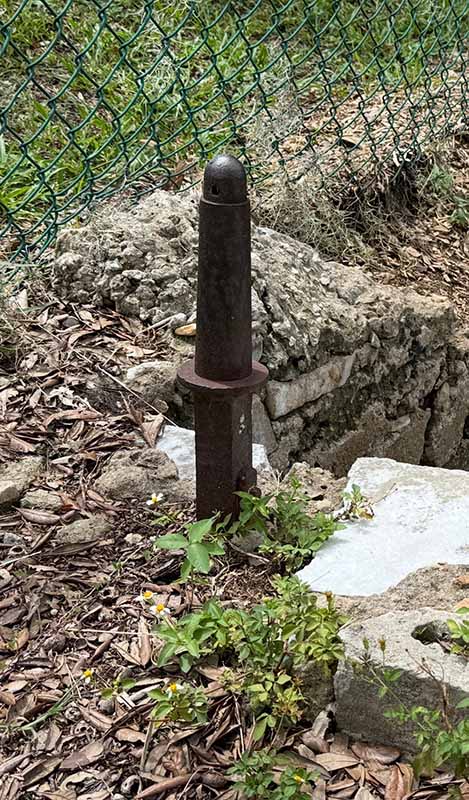
Not far behind the old property lot lines of those residences stand a set of walls that have baffled Clermont natives for generations. The crudely made but structurally sound walls have been a guessing game that has included everything from WWI barracks to transfer and loading docks for the railroad that once occupied the shoreline of Lake Minneola. Parts of the walls reveal window openings or doorways that were sealed up with the same material as the original walls.
 A local living native of Clermont who lived across the street from the land was born in 1944 and remembers with distinction the walls looking the same then as they do now. A non-certified study of the material dates the type of wall constructed as a 1920s-era way of building exterior walls in this area at the time.As true as that might be, similar era buildings built in downtown do not resemble these walls at all, including the remnants of the present-day Suncreek Brewery and Pepe’s Cantina building just yards away. Portions of that structure that were built by James Johnson in 1924 remain intact today and are composed of solid brick.
A past historian and native of Clermont, Oakley Seaver, who is now deceased, left dozens of cryptic notes for presentations and pages upon pages of documented downtown Clermont history to younger family generations. None of Mr. Seaver’s notes include the mysterious remains of the Minneola Avenue walls. Knowing Mr. Seaver, who was born in Clermont in 1916 and lived in the downtown area his entire life, this was not an oversight, but rather a blank spot in history that he did not know.
To add frustration to the research of the property, the land has been sold, divided, readdressed, and restructured in plot maps several times over the years, making late 19th-century research nearly impossible. The current owners, Evelio De Hoyos of Winter Park, bought the property in 1988.
 Over the years, several ideas have been suggested, but none have been confirmed. Some theories included a potato chip factory; however, the location of the Gem Potato Chip Factoryhas been confirmed as 8th Street and the former Lake Minneola Shores Drive in 1924. A feed store has been suggested as well, but documents reveal that the only known feed store in operation at that time was the Peoples Feed and Supply store located near West Avenue and Osceola Street.
A city jail has been suggested, as the walls are thick and lack window space. Although there is no documented location, some early-era papers indicate that there was a town jail of sorts. A “calaboose” type jail cell system was hinted, but no location has ever been confirmed. Although Clermont did have a town marshal in the early 20th century, the first documented city jail and police station did not exist until 1926 and was located on Desoto Street at 8th Street. The mystery walls are far too vast to accommodate the two-cell city jail theory.
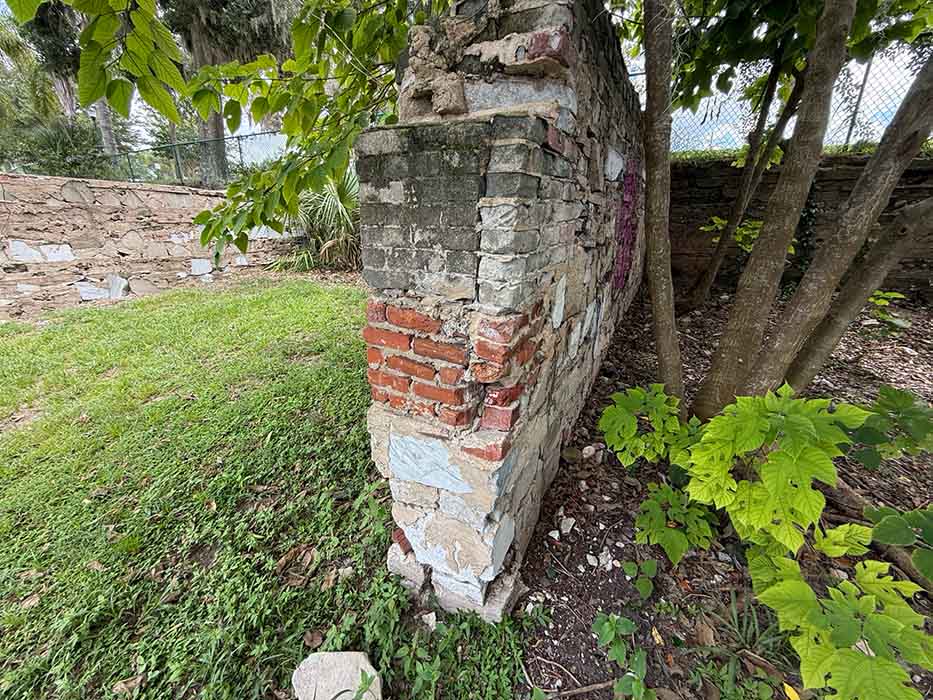
The result remains a mystery, and given the condition and appearance of the walls, it is comprehensible that the walls were in place well before the arrival of the first known settlers. Like others’ opinions, it is just a theory with no documented evidence to suggest otherwise. As the historical downtown Clermont area continues to flourish and growth continues to swallow every empty lot in sight, these walls will surely meet their demise in the coming years if no one can voice their defense for their existence. Another silent and mysterious piece of Clermont history will be lost to the dollar and the bulldozer in the name of progress.
It has been said that each property owner has a right to the use of their property, and that is certainly true. But it has also been said that preservation is our duty while history is our gift.
Decades of South Lake and Clermont history can be found in person at the Clermont Historic Village located at 490 West Avenue, Clermont, or visit www.ClermontHistoricVillage.org for a virtual tour.